
Most organizations don’t have an idea problem. They have plenty of ideas. What they’re missing is alignment, structure, and a plan that doesn’t end up buried in a desk drawer or a forgotten Google Drive folder.
In today’s webinar, we walked through the Blueprint process we’ve built and refined over the last ten years at VBM Strategy. We created it because we kept running into the same gaps with clients: teams that weren’t aligned, strategy sessions that went in circles, and strategies that never got used.
Gap 1: Teams think they’re aligned (but they aren’t)
One of the most common things we hear is “we’re all on the same page.” Leadership assumes everyone is working toward the same goals and has the same idea of what marketing should accomplish. Other times, everyone already knows they’re on different pages and nobody knows how to fix it.
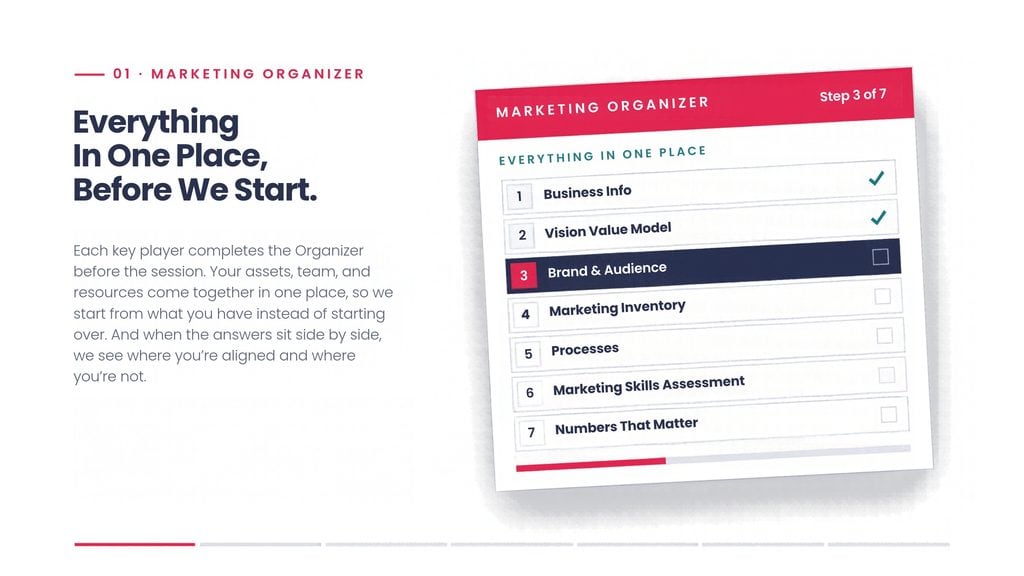
The solution: the Marketing Organizer. Everyone involved in the strategy fills it out before we ever meet. It gets everything out of people’s heads and onto paper: the marketing assets you already have, what’s currently happening, and where the obvious gaps are. Even more important, it shows us where misalignment lives. It’s not at all uncommon to find one person working toward one objective while someone else believes the goal is something completely different. Catching that early means we walk into the strategy session with all the information we need, and your team has already started getting aligned.
Gap 2: The echo chamber
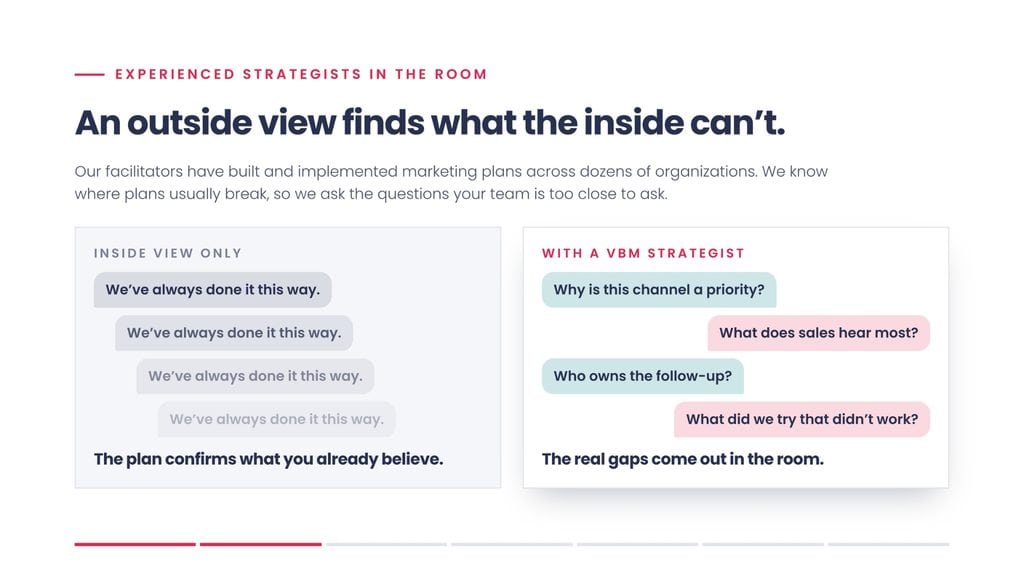
When teams build strategy on their own, the same ideas keep circulating and the same loud voices drive the room. Good ideas don’t get heard. Blind spots stay hidden. And without a structured approach, it’s easy to fall back on “this is how we’ve always done it.”
The solution: an outside facilitator. Our strategists run the session and bring an objective perspective. We challenge long-held beliefs about tactics and ask the probing questions that lead to a great strategy. It’s very hard to do that objectively for yourself, which is exactly why the outside perspective matters.
Gap 3: Sessions that throw everything at the wall
Many strategy sessions start with a free-for-all. Time gets spent on things that were already fine or that don’t need attention yet.
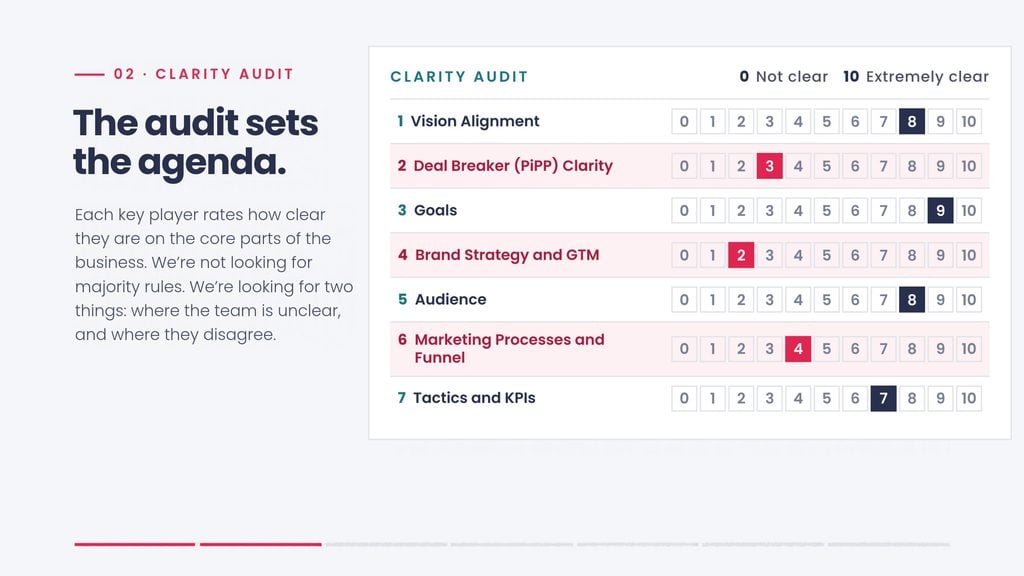
The solution: the Clarity Audit. This tool sets the agenda for your strategy session. Each key player rates how clear they are on the core areas of your marketing, and we look for areas that are unclear or where people disagree. It’s not majority rules. If half the room rates something a 10 and the other half rates it a 1, that’s a misalignment worth digging into. And if your team is already clear on your vision or your audience, we’re not going to spend an hour there. We focus the session on the gaps and save what you’re already doing well to build into the final strategy.
Gap 4: Plenty of ideas, no structure
We’ll admit it: there’s nothing we love more than a conference room, a whiteboard, and every color of marker we can find. It’s fun. It’s also not very productive most of the time. Unstructured brainstorming tends to jump straight to tactics: let’s rebrand, let’s update the logo, let’s try that trade show.
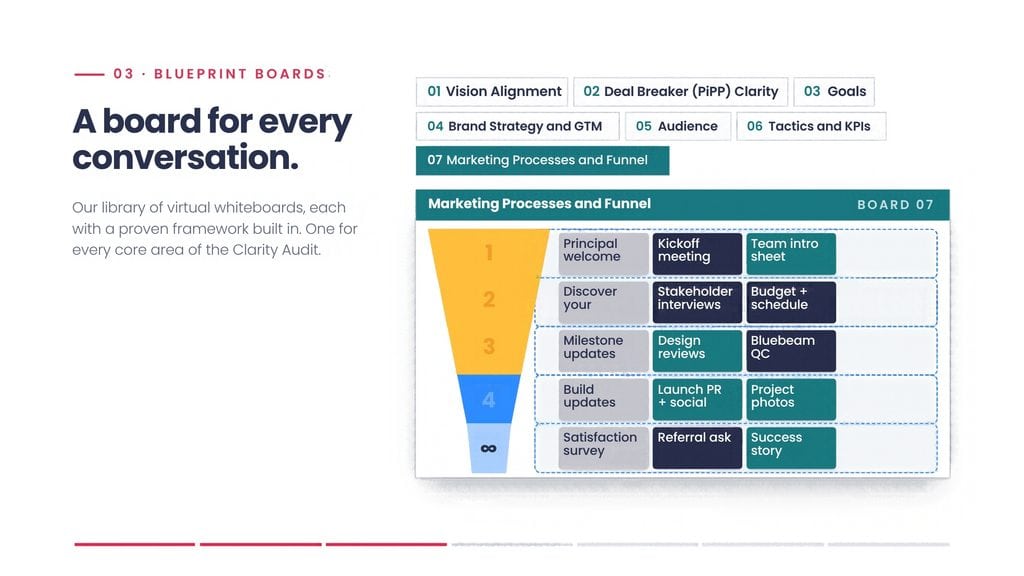
The solution: Blueprint Boards. We use a library of preset boards that keep the conversation focused on the areas the Clarity Audit flagged. Messaging comes up more than anything else, so here’s an example. Instead of tossing out taglines, we walk through our Problem Solver Method:
- Known problems: What keeps your customers up at night? What do they care about and worry about?
- Bigger problems: What could happen if they don’t work with you, including risks they may not even be aware of?
- Credibility and empathy: What makes you uniquely positioned to help, and how do you show you truly understand what they’re dealing with?
- Social proof: How are other people saying “you’re amazing, people should hire you”?
That’s the difference between structured conversation and throwing things at the wall to see what sticks.
Gap 5: Buying tactics one at a time
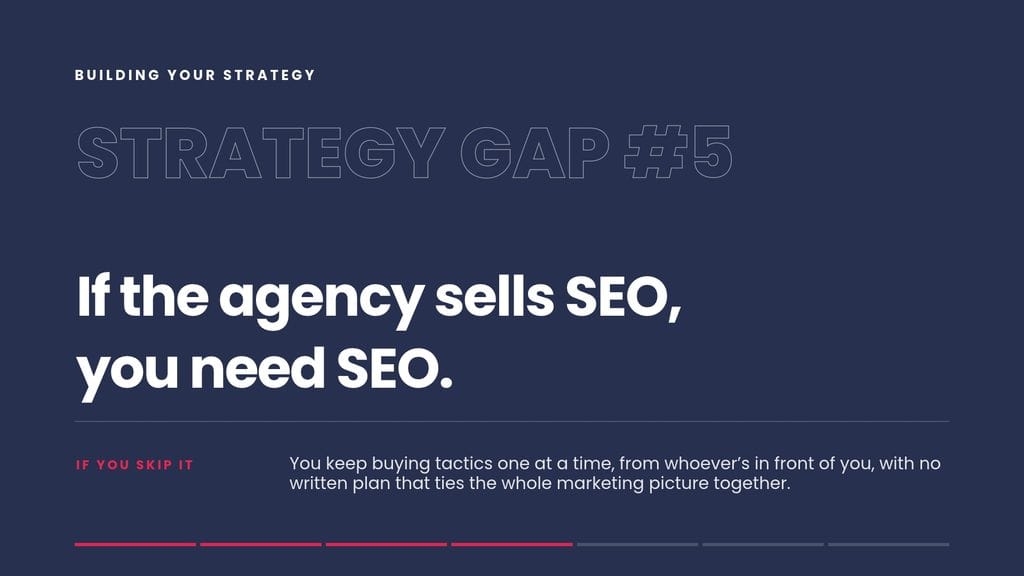
When you keep buying tactics one at a time with no written plan tying them together, you get random acts of marketing. In traditional marketing, the strategy is often shaped by what the agency sells. Ask an SEO agency what you need, and the answer is usually going to be SEO.
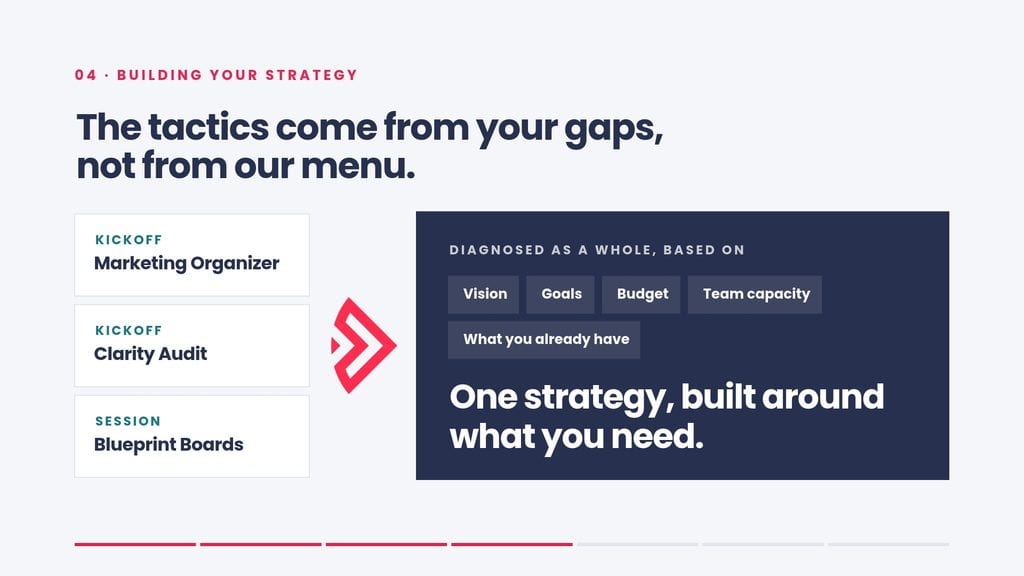
The solution: tactics that come from your gaps. We don’t have a tactic to sell. We take everything we’ve learned about your team, goals, budget, and capacity, and we build a plan around what you actually need. Teams often come in convinced they need to be doing all the things. The reality is you need to do a select group of things very well.
Gap 6: A strategy nobody uses
Most organizations either have no written plan or have one nobody has looked at since the day it was created.
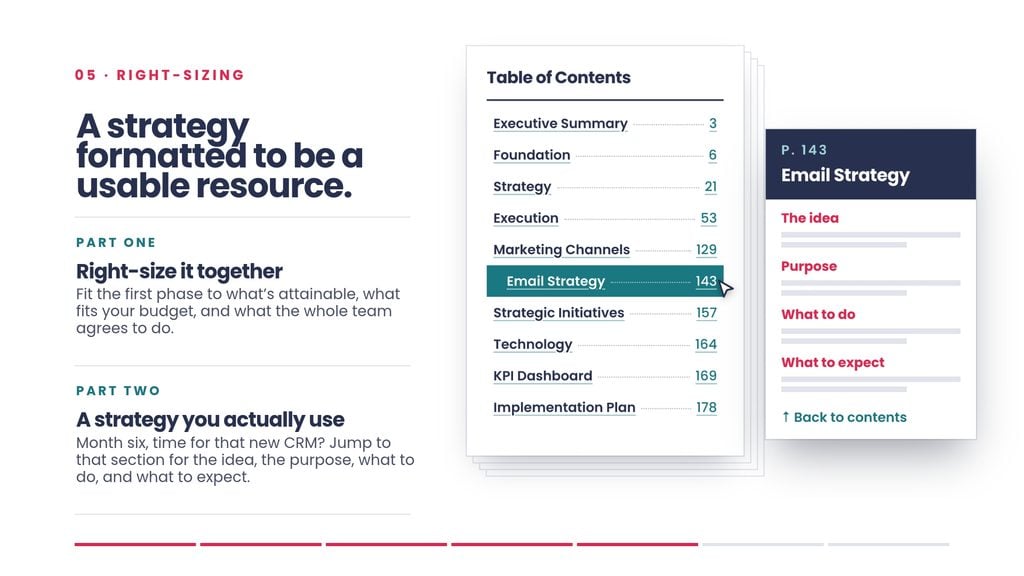
The solution: a rightsizing session. After the strategy session, our team builds your strategy by pulling together the Marketing Organizer, the Clarity Audit, the session conversations, and what you’re already doing well. Then we come back together to right-size it. What’s realistic for the first phase? What fits the budget? What will the whole team actually commit to?
The result isn’t something you read once. Six months from now, when it’s time to tackle the next initiative, you open it up, go to that section, and it tells you what to do and what to expect. Whether you implement it with your internal team, your agency, or with us, it becomes the tool you pull out every quarter to decide what comes next. And when it’s time to plan for the following year, you already have a baseline to start from.
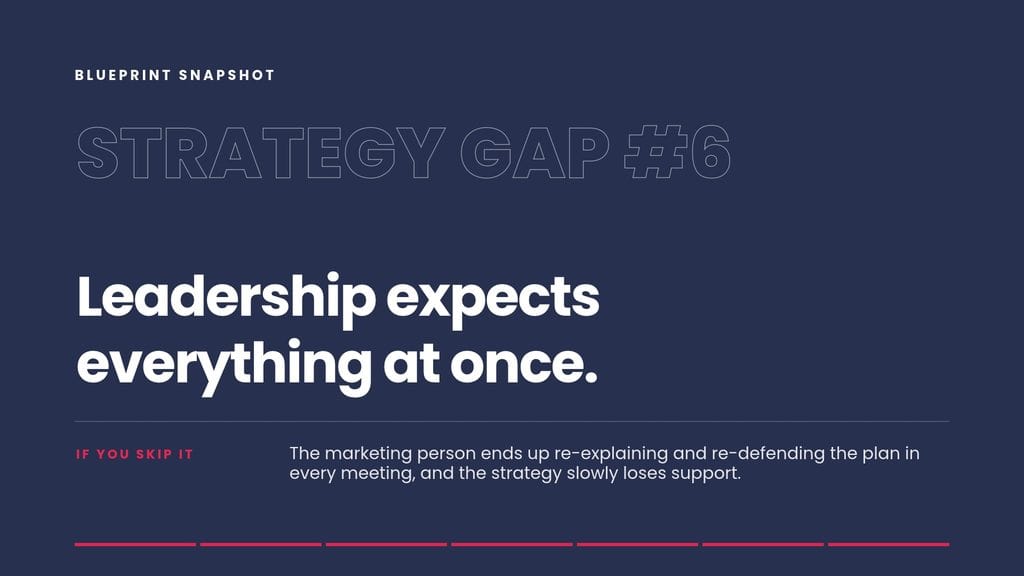
Gap 7: Trying to do everything at once
Once a strategy is done, everyone is excited, and leaders often ask, “Why can’t we just do it all right now?” Realistically, that’s not how it works. The best strategies build on themselves: the first phase lays the foundation, and each phase after builds on it for compounding results.
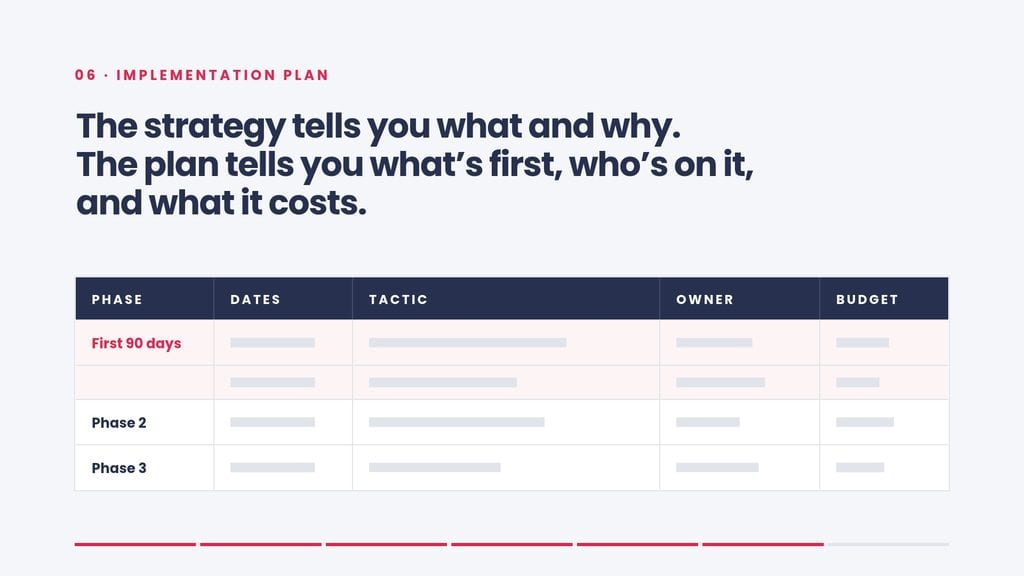
The solution: the Implementation Plan. It breaks the year into phases, typically 90 days at a time, and defines what’s being done, who owns each piece (your internal team, outside vendors, or agency partners), and what the budget is, so leadership knows exactly what’s being spent and what to expect. It also makes it much easier to say no to requests that don’t fit the strategy or the current phase. Those guardrails keep everyone strategic instead of drifting back into random acts of marketing.
Gap 8: Leadership loses track of what marketing is doing
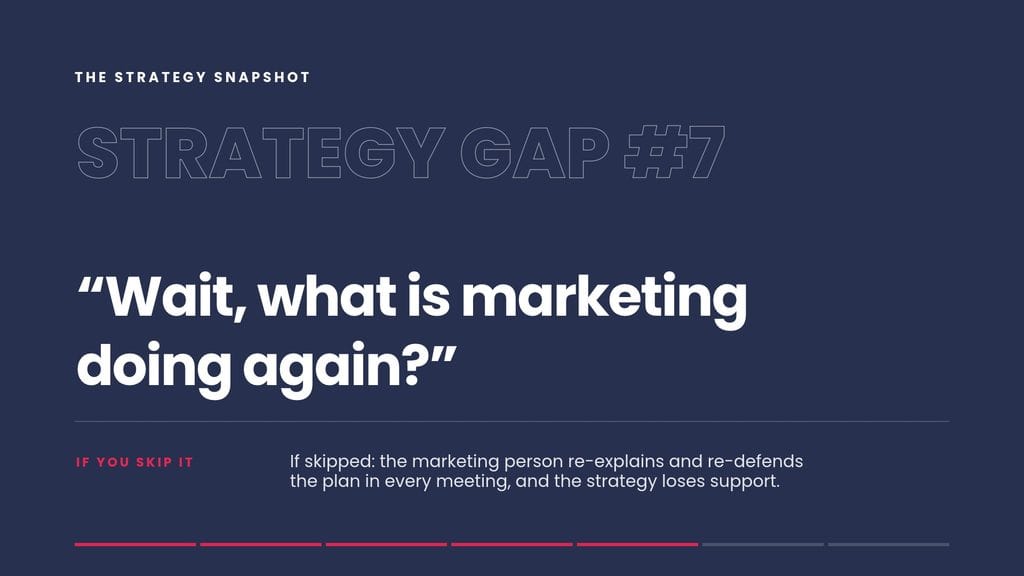
It’s common for someone on the board or leadership team to stop mid-year and ask, “Wait, what is marketing doing again?” The full strategy is detailed, and your CEO and board members don’t need to read all of it.
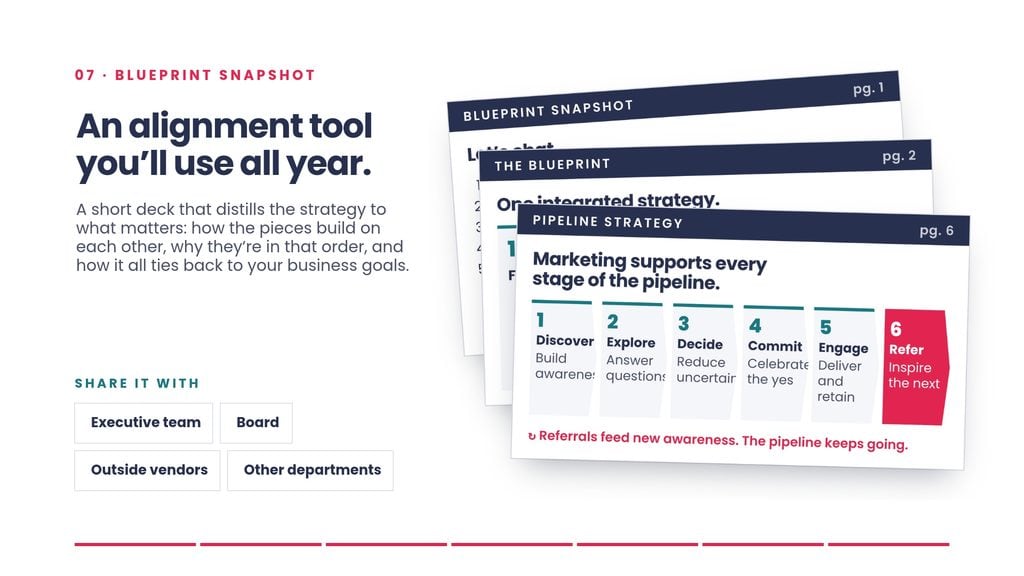
The solution: the Strategy Snapshot. This alignment tool summarizes what marketing is doing and the business outcomes it’s driving, so you can keep people outside of marketing on board throughout the year.
It all comes down to three pieces
That may sound like a lot, but the Blueprint process really comes down to three steps:
- A kickoff where you get organized.
- One three-hour strategy session focused on the gaps that matter most to your organization.
- A rightsizing session where we bring it all back together and fit it to your team.
From there, you’re ready to move into implementation with a strategy, the tools to use it, and a way to revisit it every quarter on your own schedule, within your own budget, resources, and capacity. It’s not going to get stuck in a drawer.
Your first step: the Marketing Organizer
Whether you work with us on a Blueprint strategy or take another route, the Marketing Organizer is the place to start. You can fill it out with your team or on your own as leadership. It brings everything together so you can start having the right conversations, because ideas aren’t the problem. Alignment is.
Grab the Marketing Organizer and take the first step toward replacing random acts of marketing with a strategy your whole organization can get behind.